

Soil Health
Starting a garden from seed can be very intimidating, but it doesn't have to be. Let's start by taking a step back to our school days and looking at what plants need to grow. You'll want to think about the following things when planning your garden space, direct sowing your seeds in your garden, and even starting seeds inside or in a greenhouse.
Sunlight
Plants need sunlight to grow, and most need a lot of it. You'll notice on seed pack and plants tags there will be a classification of Full Sun, Partial Sun/light shade, or Full Shade. These classifications tell you how many hours of sun your plants will need in order to grow properly and produce the harvest they're intended to.
Full Sun: 6 to 8 hours of direct sunlight per day
Partial Sun or Light Shade: 3-6 hours of direct sunlight per day
Full Shade: Less than 3 hours of direct sunlight per day
Water
All plants need water, weather it's from the sky or a hose, every plant has some type of water requirement. It'll be your responsibility to ensure you garden stays hydrated throughout the season. Things to consider are how you'll get the water weather it's by hose, bucket, etc. When planning your garden space think about how accessible water is.
Soil
Soil is essential for the garden. Now there are alternative methods of growing without soil such as hydroponics and aquaponics, but for this course I will only cover growing in soil as this is the only method in which I grow.
Soil, is by far, the most important factor in growing food. If you don't have good soil, you will be plagued with a multitude of problems and inevitable failures. In fact, when issues do arise in the garden (which they inevitable will) the first place to look for answers will typically lie with in the soil.
Your soil is the environment in which your plants live. It is where they obtain all of the required nutrients to grow strong root systems and produce that amazing harvest we long for each year. Soil is alive, it's an entire ecosystem full of microbes, organisms, and nutrients, each playing its own part in the vitality of the plants in it. I will not deep dive into all of the intricate details in this course, as this is a course in itself. I will however provide you with the basic information you'll need to establish and maintain a health soil environment.
The first aspect of soil health is moisture and drainage. You want your soil to be moist, but not wet. You can gage this by taking a handful of your soil and squeezing it in your hand. If the soil is moist and excess water doesn't run from between your fingers it's just right. If you do get water coming out it's too wet. Too wet is not good, this can cause root rot, because you're essentially suffocating your plants roots. Good drainage is the key to moist soil.
On the flip side you don't want your soil to be too dry either. If your soil is compacted, or lacks moisture holding components, you'll have amazing drainage and dry soil. This actually was what happened to my raised beds just last year. I am currently in the process of amending my beds so they will retain the moisture they need. It seems complicated at first, but I promise you it'll come natural as your 1st season gets under way.
Organic Matter
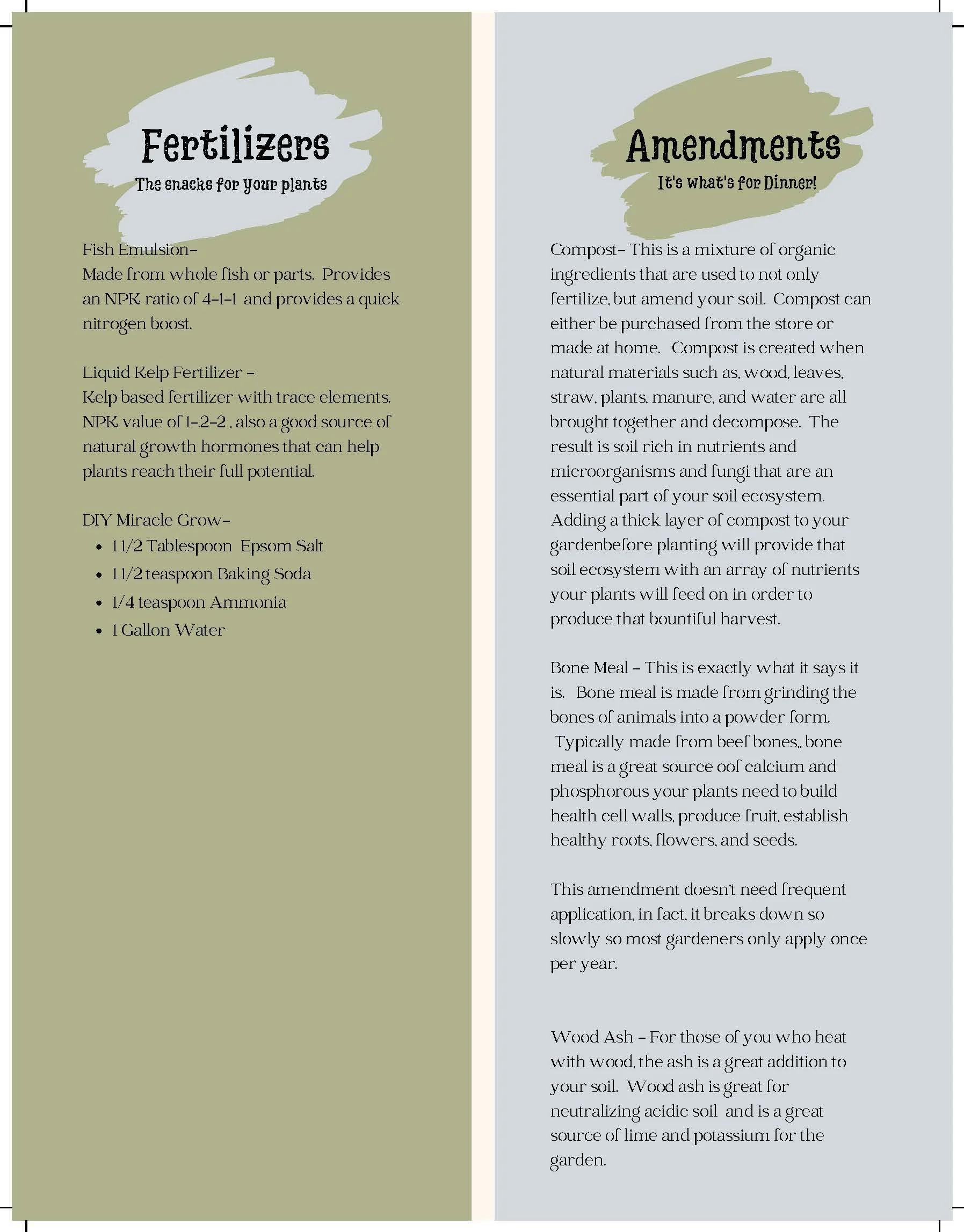
The organic matter in your soil is the food for your plants. Just like the human body, if we don't eat, we don't live. Plants are the same way, if they don't get the required nutrients they need, they can't live. This was and sometimes still is one of the most overwhelming and confusing things to a new and sometimes experienced gardener. See amendments and fertilizers are 2 different things. Fertilizers are like snacks for your plants, they're little boost of nutrients to pep them up when you see something specific going on. Amendments, on the other hand, are like meals, they are additives to the soil which will feed your plants for a longer period of time. There are hundreds of different types of fertilizers, and soil amendments all advertised as being what you need for the best garden. I don't know how many times I've gone down the rabbit hole of trying to decipher which one is the best one. My advice is don't do it!! Do not try to find the perfect fertilizer, it doesn't exist. There is no singular product which will fix everything in one fail swoop. In fact I caution the use of a lot of fertilizers for anyone just starting out. I have literally fried so many plants when I first started out because I OVER fertilized my plants.
So, how do I feed mine? I stick to very basic organic options. In fact, there are really only a handful of products I use all together. I'll briefly go through them on the next page, in order to give you a starting point. I have another book in the works which will go much more in depth, and as your progress through this course, you're going to learn how to listen to your plants.
Amendments are simple things like compost, leaves, sticks, worm castings, rotting logs, eggshells etc. Amendments are the ways mother nature feeds her forests, and fields. Amendments are typically added to the soil typically in the spring and fall to assist in maintaining that ecosystem in the soil. You'll see a list of basic amendments and their function in the picture below.
Mulch
Soil is modest, it doesn't like to be naked or exposed. In nature, you will rarely see soil just hanging out uncovered. In fact, if you try to leave it exposed, it will ultimately cover itself. Weather it's by grass or weeds, it'll be covered. This is why we mulch. Mulch serves many purposes such as maintaining soil moisture, temperature, structure, and also nourishment. Think of mulch as your gardens cover or clothing. It protects your garden and plants from the elements. A thick layer of mulch 6" or more can essentially eliminate the vast majority of weeds overall.
In my experience mulch is one of the most important additions to the garden. Personally I use straw and leaves for my mulch. You can also use wood chips, grass clippings, and pine needles. The main focus of mulching your plants is to regulate the soil temperature, retain moisture, weed suppression, and even pest control. Overtime you’ll notice the mulch will break down and become apart of your soil adding extra nutrition and texture to your soil.
One word of caution with certain types of mulch is it can alter your soil ph over time depending on the type you use . If using pine needles or wood chips, you may want to alternate every couple seasons to ensure your soil doesn’t become too acidic.